Trauma-Responsive Approach
We strongly believe in supporting our students in more than just their academic endeavors. To meet their emotional and social needs, Paladin has created a student-centered, trauma-responsive community where all staff are trained in Trauma-Informed Care Theory and practices. By understanding the impacts of trauma, we have developed a safe and supportive environment where positive student relationships are paramount. By cultivating an environment of inclusion, equity, and acceptance, students develop the confidence to further their learning.
Students’ social and emotional needs are met by a diverse group of mental health professionals with a focus on overcoming adversity and building resilience. We offer basic needs resources and utilize support seminars and mental health services to assist our students in all areas of their lives. Paladin utilizes a restorative practice model to resolve issues and conflicts by holding students accountable for their actions and working together to repair the harm that occurred.
Adverse Childhood Experiences (ACEs)
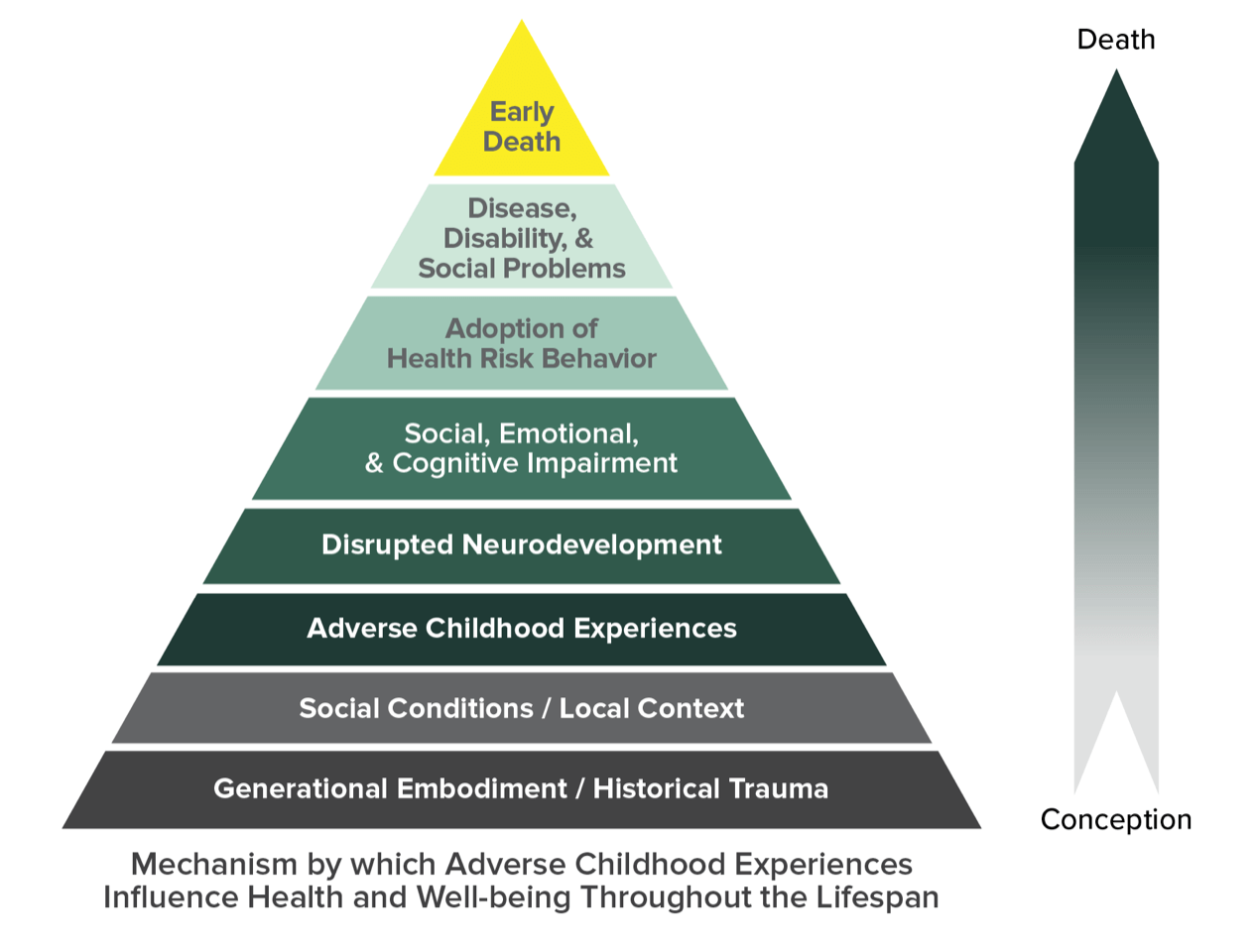
We have made a conscious decision to address the fact that many of our students have experienced emotional distress and childhood trauma. In 2012, Paladin began incorporating the Adverse Childhood Experiences Study (ACES) into school programming in an effort to help foster our students’ innate resilience.
The Centers for Disease Control utilizes the ACE Study to explore the difficulties that people face in adulthood when they’ve suffered Adverse Childhood Experiences. The study found that, without proper intervention, a child’s experiences with traumatic events can lead to chronic diseases, abuse, mental health diagnoses, difficulty with behavioral regulation, and greater difficulty coping with adversity.
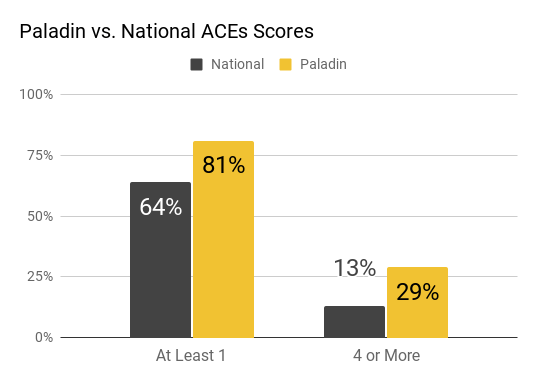
We seek to mitigate the harm caused by trauma and a high ACES score, because we have found that Paladin students, on average, have a higher ACES score than the national norm. In fact, they have an ACES score of 4 or greater at more than twice the frequency of the national norm.
A report on Paladin’s Trauma-Sensitive approach was published in December of 2016 by American Public Media. To read that article and listen to an accompanying podcast with teacher and student interviews follow the link below:
APM Report – School Confronts Trauma in Students' Lives

“The staff were amazing. I have never had teachers in previous schools that cared about my personal life and struggles and helped me figure out ways to work around them to be successful in a school setting. They were very compassionate. The therapeutic set up of the school as well as project based learning were things that worked amazing for my needs and was completely different than any other school I went to previously. It basically completely changed my life, my view of myself, and my future possibilities.”Paladin Student
Restorative Approach
Unlike traditional disciplinary models, Paladin uses a restorative practice approach to make things right. When a conflict arises at school, instead of first resorting to suspension or expulsion, a Restorative Practice Team member will meet with all who were involved in the conflict. The parties will discuss the participants’ behaviors, accountability, the cause and effect of the situation, and then will work together to develop a plan to repair the relationship.
Paladin utilizes restorative practices and circle processes to repair harmed relationships between students and/or staff. Through our Vibe Control program, student peer mediators are trained in conflict resolution skills and restorative practice guidelines to support Paladin’s positive culture. As a result, our school culture is more unified and Paladin has created an environment in which students feel accepted and valued, despite previous incidents.
Dedicating ourselves to restorative practices has strengthened our school community beyond the resolution of behavioral issues. The ripple effect of this compassionate approach also empowers students to achieve greater academic success and become leaders in their communities.


“If you do things to kids, that’s punishment. If you do things for them, that’s permissive. Do nothing at all, and that’s neglect. But if you do things with them, that’s restorative.”Brandon Wait, Paladin Career & Technical High School Principal
EdVisions
To read an EdVisions article about the value and impact of Restorative Practices in schools, and how Paladin has embraced this model, follow the link below.
Making the Case for Restorative PracticesDisrupting the Status Quo
A dissertation by Jennifer K. Blevins after having worked with Paladin staff and students during the 2017-18 school year
Case Study of Paladin Career & Technical High School’s Use of Restorative Practices
Abstract
This dissertation research is a qualitative case study to describe and explore the experiences of staff and students using restorative practices at Paladin Career and Technical High School (Paladin), a 9-12 grade charter school in Blaine, Minnesota. Restorative practices were introduced in schools as an alternative means of handling problems as they arise; however have expanded as a whole school approach to build community, develop empathy, improve school climate and prevent problems before they occur. The aim of this study was to describe:
- The process and turning points in integrating restorative practices at Paladin.
- The students and staff understandings of restorative practices and the impact.
- The implications for future school-based restorative practices at Paladin.
- What this case study analysis suggests about school-based restorative practices, policies and impact in general.
All phases of the research were carried out through a critical race lens. Data at Paladin was collected through the review of archival documents and school policies, participant observations and interviews with seven staff and seven students. The research suggests Paladin disrupts the status quo for students and staff by making the system fit the individual not the individual fit the system, restoring self, strengthening interpersonal relationships, being a safer school, and focusing on solutions not suspensions. Key findings and potential implications are discussed for Paladin, restorative practitioners, other school stakeholders and for public policy.
Click Here for the Entire Dissertation